

When Should a Couple Seek Fertility Evaluation?
Understanding when to seek help is the first step on your fertility journey. The general guideline is to seek evaluation if you have been trying to conceive (TTC) for over 12 months without success and the female partner is under 35 years old. If the female partner is over 35, the timeframe shortens to 6 months due to the natural decline in fertility. However, early evaluation is recommended regardless of age if you have a history of menstrual disorders (like irregular periods), previous pelvic infections, endometriosis, or a history of previous pregnancy loss.
Common Causes of Infertility in Women
Female infertility can stem from various physical or hormonal issues. Ovulatory dysfunction is the most frequent cause, often related to conditions like Polycystic Ovary Syndrome (PCOS) or Premature Ovarian Failure (POF). Tubal factors, such as blocked fallopian tubes from past infections, prevent the egg and sperm from meeting. Endometriosis, where tissue similar to the uterine lining grows outside the uterus, can cause scarring and affect egg quality. Uterine anomalies, including fibroids or polyps, can interfere with implantation. In some cases, infertility is classified as 'unexplained,' requiring a different therapeutic approach.
Male Factor Infertility — Often Overlooked
It is a common misconception that infertility is solely a woman's issue. In reality, male factor infertility contributes to or is the sole cause in roughly 40% of all cases. This is why we emphasize evaluating both partners from the beginning. Male infertility is typically diagnosed through a semen analysis, which assesses sperm count (quantity), motility (movement), and morphology (shape). Factors affecting sperm health can include varicoceles, infections, hormonal imbalances, and lifestyle choices. Identifying male factors early prevents unnecessary, invasive testing on the female partner.
Fertility Workup at Star Ortho, Wakad
Our systematic fertility workup is designed to uncover the root cause of your conception challenges efficiently. For women, this includes a comprehensive hormonal profile testing FSH, LH, AMH (to check ovarian reserve), prolactin, and TSH. A detailed pelvic ultrasound helps evaluate the uterus and ovaries. When indicated, we recommend a Hysterosalpingogram (HSG) to check if the fallopian tubes are open. Concurrently, we refer the male partner for a reliable semen analysis. This thorough, dual evaluation ensures we build a complete picture of your fertility health before recommending any treatment.
Initial Treatment Options
Once the cause is identified, we focus on the most effective, least invasive initial treatments. For ovulatory issues, we often use ovulation induction medications like Clomiphene or Letrozole, closely monitoring follicle growth via ultrasound to time intercourse perfectly. We emphasize lifestyle optimization—including diet, weight management, and stress reduction—which can significantly improve fertility outcomes. In cases involving mild male factor infertility, we may prepare you for Intrauterine Insemination (IUI). For structural issues like endometriosis or blocked tubes, we discuss the potential role of diagnostic or therapeutic laparoscopy.
IVF & Advanced Fertility Treatments — Our Role
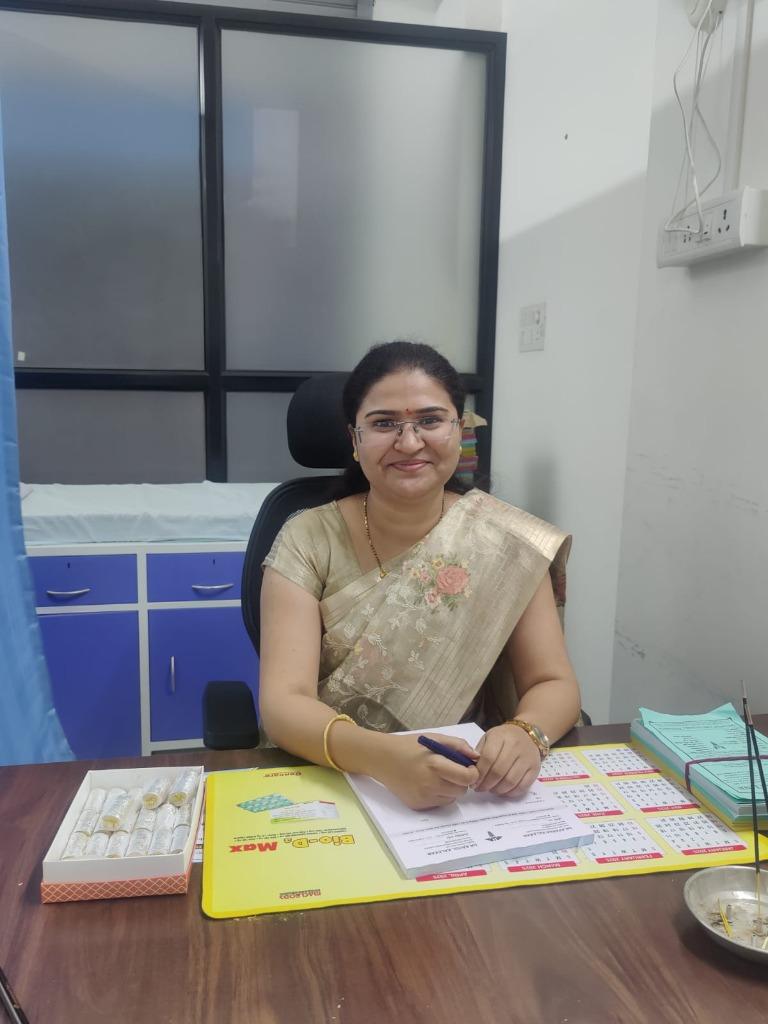
While we provide comprehensive initial evaluation and first-line treatments like ovulation induction, some couples require Advanced Reproductive Technologies (ART) such as IVF. In these instances, Dr. Aparna Kalekar plays a crucial role in your journey. We conduct the initial optimization and prepare you physically and mentally for the process. When advanced treatment is necessary, we provide a prompt referral to specialized IVF centers. We ensure the receiving specialist receives a complete, detailed clinical summary of your workup, saving you time and avoiding repeated testing.